
MUSUBI: It’s Not Just About English: The Soft Skills Every ALT Needs
 Posted on Last updated on

When people hear Assistant Language Teacher (ALT), many assume that the only requirement is strong English skills. While being proficient in English is important, it’s just one piece of the puzzle.
Whether you're considering applying to work with dispatch companies, the JET Programme, or teaching in a private school, being an effective ALT requires more than just knowing grammar rules and pronunciation. In fact, some of the most essential skills have nothing to do with language at all.
If you're wondering whether you're suited to the role, here are a few key skills that truly make a difference in the classroom and in your overall experience as an ALT in Japan.
Communication That Connects (Beyond the Language)
Remember: Communication isn’t just about what you say, it’s also about how well you listen and respond.
Cross-Cultural Adaptability and Patience
Living and working in Japan is a cultural experience as much as a professional one. You'll encounter different teaching styles, work expectations, and social norms. Being open-minded, observant, and respectful of local customs helps you adjust smoothly and shows your coworkers you’re committed to being a team player.
And here’s where patience comes in.
Language learning takes time and so does building rapport. Some students may seem disinterested or shy. Teachers may cancel lessons without notice or change plans last-minute. These things are normal.
Your ability to stay calm, curious, and positive even in the face of ambiguity will set you apart.
Ask yourself: Can I adapt when things don’t go the way I expect?
Creativity in the Classroom
You don't need to reinvent the curriculum, but creative thinking can turn a forgettable grammar point into something students will talk about after class.
From designing activities that get students moving, to using pop culture or personal stories to spark interest, creativity helps bridge the gap between “boring worksheet” and “fun lesson.”
Even a simple quiz can become memorable with a little imagination.
Teamwork and Initiative
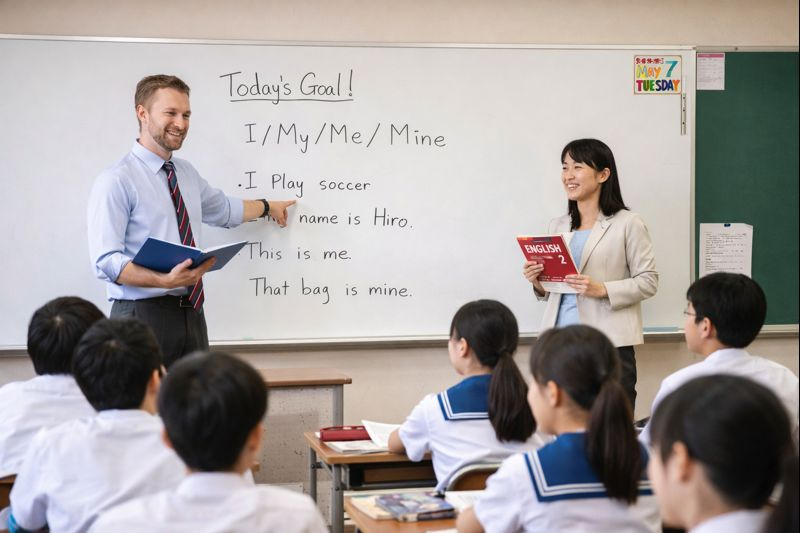
The best ALTs don’t wait to be asked, they offer to help.
Final Thoughts
You don’t need to be a walking dictionary or a teaching expert to be a great ALT. What really matters are your people skills, adaptability, and willingness to grow.
So if you’ve ever doubted yourself because you’re "not a teacher" or "not fluent in Japanese", don’t count yourself out. The skills you already have may be exactly what a classroom in Japan needs.
Ask Yourself: Do I enjoy working with people from different backgrounds? Can I stay calm and flexible in unfamiliar situations? Am I willing to learn and be open to feedback?
WRITER

MUSUBI Admin
The editor and site administrator for the MUSUBI blog presented by Borderlink, Inc.
RECOMMENDED
-


Two Countries, Two Food Cultures
Hello, I am Sabina Maharjan from Nepal. I have been living here in Japan since 2019. When I first came to Japan, I ... -
Do's and Don'ts of Winter in Japan
Japan is a country of stunning natural beauty and a rich cultural heritage. One of the most enchanting times to ... -

Kona’s Coffee - A Hawaiian Paradise in Himeji
If there’s one thing I’ve learned while being here in Japan, it’s that everyone loves Haw...